

For Orders above £1000

Order online &
collect on time

100% Protected
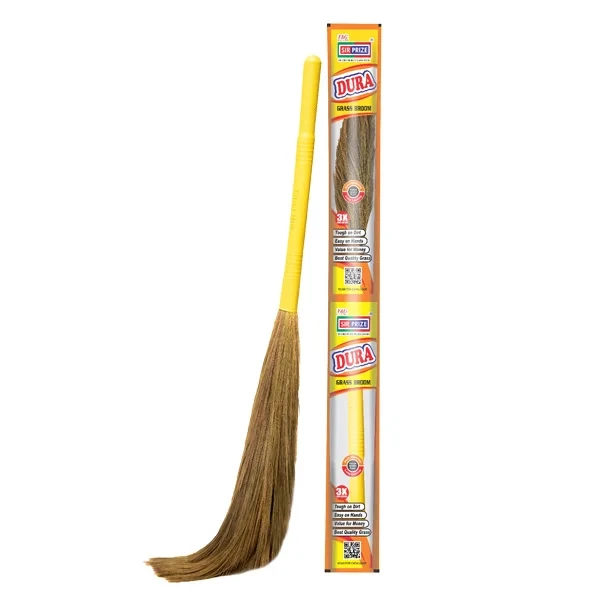
The broom has been a fundamental household implement for centuries, evolving from simple bundles of twigs (besoms) to specialized industrial tools.
Design & Types: Standard brooms feature a cylindrical handle (broomstick) roughly 42 inches long, connected to a "head" or "block" that holds the bristles. Variations include soft brooms for light dust and cobwebs, hard brooms for rough surfaces like concrete, and specialized warehouse brooms for heavy industrial debris.
Cultural Significance: Beyond cleaning, brooms carry symbolic weight, historically associated with witchcraft and used in marriage ceremonies like "jumping the broom" in various cultures.
Manufacturing: Traditional handmade brooms often use broom corn (a type of sorghum), which has a natural wax that makes it mold-resistant and highly effective at trapping fine dust. Modern mass-produced versions frequently utilize synthetic plastic bristles for durability and cost-effectiveness.
Ingredients (Materials)
While a "broom" is an object rather than a recipe, its construction typically involves the following materials or "ingredients":
Bristle Fibers:
Natural: Broom corn (Sorghum vulgare), coconut leaf midribs (Eerkkil), broom grass (Assam), palmyra, or birch twigs.
Synthetic: Nylon, plastic, or rubber.
Handle (Broomstick):
Hardwoods like ash, oak, or hickory.
Lightweight materials like bamboo, metal, or plastic.
Fasteners:
Metal tension wire or steel nails to secure bristles to the handle.
Nylon bank twine or waxed hemp for stitching and binding.




Customer Reviews